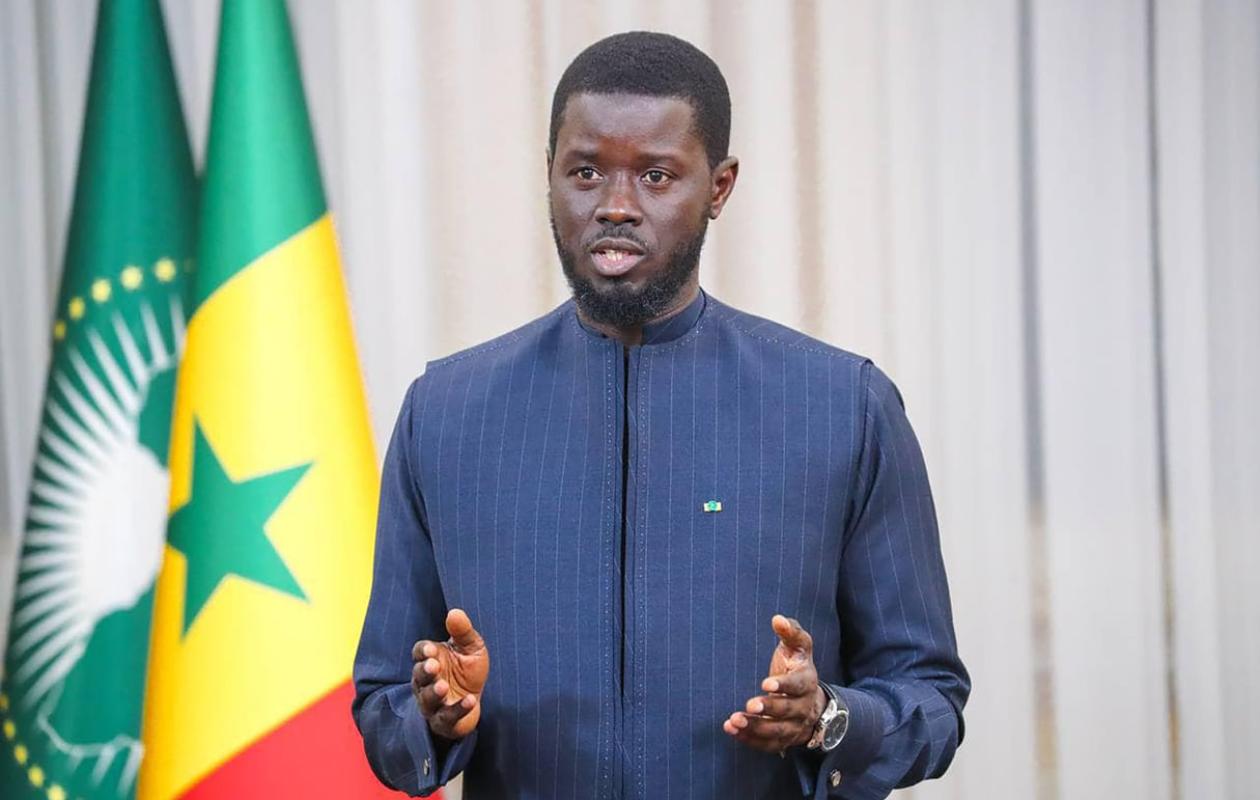
Le Sénégal durcit drastiquement sa répression de l'homosexualité : Le Président Faye promulgue la loi du "10 ans ferme"
This marks a major conservative shift for the Republic of Senegal. President Bassirou Diomaye Faye promulgated a law on Tuesday, March 31, 2026, significantly strengthening criminal penalties for homosexuality and LGBTQIA+ identities. This legislation, adopted almost unanimously by the National Assembly in mid-March, doubles the minimum prison sentence, now bringing the maximum to ten years. This decision fulfills a campaign promise of the ruling party but has sparked outrage among international human rights organizations.
The new legislation significantly amends Article 319-3 of the Penal Code, a legacy of 1966. The old text punished "acts against nature" with a sentence of one to five years' imprisonment. The new law removes this wording, deemed ambiguous, to explicitly name homosexual relations and sets the mandatory sentence range of five to ten years' imprisonment .
The financial aspect is not to be outdone: potential fines have exploded, rising from 1.5 million to 10 million CFA francs (approximately 15,200 euros).
But the measure most feared by activists concerns the ban on "the glorification, promotion, support, or financing" of homosexuality, bisexuality, or transgender identity, punishable by three to seven years in prison. This provision poses a direct threat to NGOs, journalists, and healthcare workers serving these communities, particularly in the fight against HIV/AIDS.
This promulgation comes amid a tense social climate in Senegal, a predominantly Muslim country where homosexuality is an absolute cultural taboo. The vote in the Assembly (135 votes for, 0 against) reflects the growing influence of religious groups and civil society, such as the And Samm Jikko Yi collective (Together for the Safeguarding of Values), which had been lobbying for years for more explicit criminalization.
Recent weeks have seen an increase in arrests and denunciations in several regions of the country, exacerbating the vulnerability of marginalized communities. Provisions in the law requiring judges not to grant suspended sentences and not to impose sentences below the legal minimum reinforce the perception of an "unrelenting" justice system.
For President Faye and his Prime Minister Ousmane Sonko, this signing represents a domestic political victory. During the 2024 election campaign, the PASTEF party (Patriots of Senegal for Work, Ethics, and Fraternity) firmly grounded its message in the "protection of traditional and religious values" against perceived Western influences. The promulgation of this law is therefore the fulfillment of a commitment made to their electorate.
However, this choice places the head of state in a delicate diplomatic position. The UN, through the High Commissioner for Human Rights, as well as major organizations such as Amnesty International and the FIDH, had solemnly asked the President not to sign this text, deeming it discriminatory and contrary to international treaties ratified by Senegal.
The consequences of this law are feared on two fronts. On the one hand, human rights organizations fear a witch hunt, an increase in homophobic violence, and a mass exodus of LGBTQIA+ people in Senegal. On the other hand, public health officials warn that this tightening of the law risks disrupting HIV prevention and treatment by pushing at-risk populations into complete secrecy, thus jeopardizing progress made in the fight against the epidemic.
The law does, however, contain a controversial provision on "abusive denunciations made in bad faith," attempting to introduce a safeguard. But for many observers, the damage is done: the Senegalese state has chosen its side in the battle of values, at the expense of a universal vision of human rights.




















Commentaires (0)
Participer à la Discussion
Règles de la communauté
💡 Astuce : Utilisez des emojis depuis votre téléphone ou le module emoji ci-dessous. Cliquez sur GIF pour ajouter un GIF animé. Collez un lien X/Twitter, TikTok ou Instagram pour l'afficher automatiquement.
Se connecter
Commentez avec votre profil, votre photo, et soyez averti des réponses.