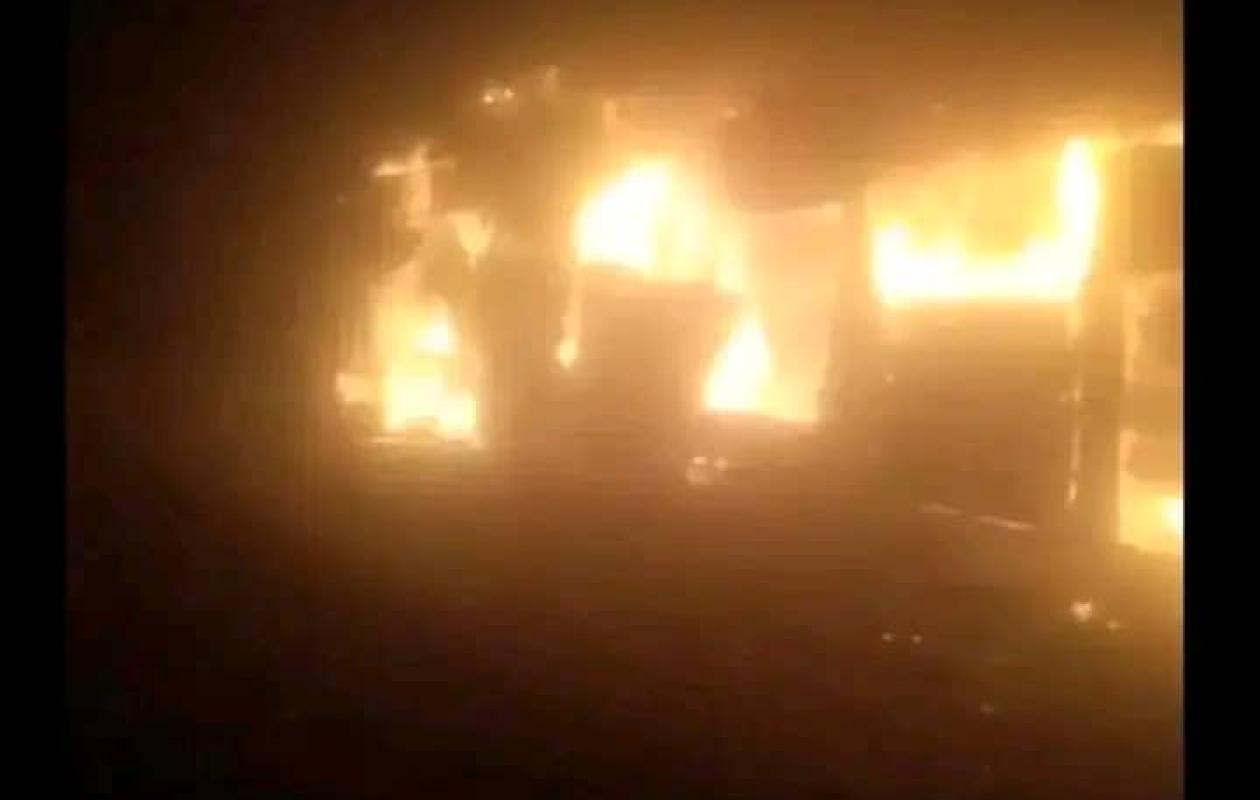
N’Djamena : L'Incendie Des Marchés, Chronique D’un Échec Annoncé
The news from N'Djamena's markets is no longer an event, it's a macabre ritual. Year after year, the Chadian capital offers the same desolate spectacle: plumes of black smoke tearing through the sky, cries of distress from ruined traders, and the still-smoldering ashes of an economic engine. Collective grief has become routine, and the questions, increasingly bitter. Why does this tragedy repeat itself endlessly?
The primary culprit is the environment itself. N'Djamena's large markets are not the product of urban planning, but rather the result of uncontrolled proliferation. They are makeshift labyrinths where each stall is crammed onto the next.
The myth of the "traditional market" masks a dangerous reality: that of improvised structures, lacking safety walkways and fire suppression systems. In other words, these are not places of commerce, but giant flammable traps where, once started, a fire is impossible to contain.
Furthermore, the state of the electrical installations defies all logic. Bare wires lie on the floor, tangled like vines in the rain and under the feet of customers. It is inconceivable that the epicenter of the capital's commerce should be managed with a negligence that would be unacceptable in even the smallest private warehouse.
Faced with this vulnerability, the absence of public authority is the most damning accusation. The town hall's presence is essentially limited to the daily and monthly collection of taxes and fees . The tax system is running at full capacity, but everything else has ground to a halt.
How can one justify leaving a place that generates billions of CFA francs in economic activity each month to complete randomness? A municipality's role goes beyond simply collecting taxes; its primary responsibility is to protect, regulate, and organize . In N'Djamena, this essential duty seems to have vanished.
Certainly, the shopkeepers are not without blame. Illegal electrical connections, shop extensions disregarding the few meters of aisle remaining, hazardous storage of goods... indiscipline is a reality.
However, in any functioning city, public authorities are there to transform individual indiscipline into respect for collective norms. The real problem is not the incivility of shopkeepers, but the absence of a strong regulatory framework .
The laxity of municipal management allows everyone to build and connect as they please, creating this explosive tangle which inevitably ends up catching fire.
The markets of N'Djamena are much more than piles of corrugated iron and wood: they are the engine of the informal economy, the livelihood of thousands of families. Letting them burn is to accept the gradual destruction of a large part of Chad's economic activity.
The time for observation is over; now is the time for a complete overhaul of urban management.
The lesson is tragic, but clear. Chad must finally move beyond the routine of mourning to a genuine policy of prevention. Inaction is now complicit.


















Commentaires (0)
Participer à la Discussion
Règles de la communauté :
💡 Astuce : Utilisez des emojis depuis votre téléphone ou le module emoji ci-dessous. Cliquez sur GIF pour ajouter un GIF animé. Collez un lien X/Twitter, TikTok ou Instagram pour l'afficher automatiquement.