Côte d’Ivoire 2030 : Le CESEC reçoit en primeur la feuille de route historique de 114 838 milliards FCFA
The Economic, Social, Environmental and Cultural Council (CESEC) became the first institution in the Republic to host the official presentation of the National Development Plan (PND 2026-2030) after its adoption by Parliament.
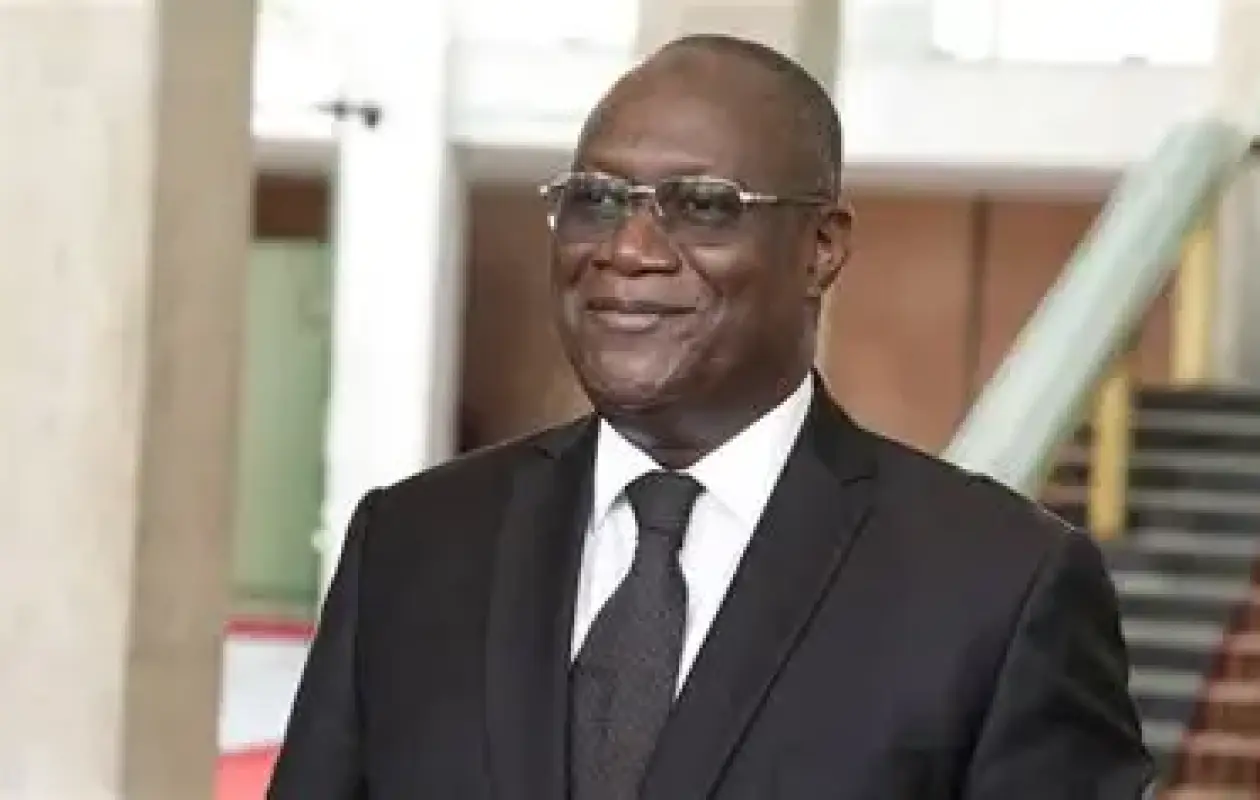
On Wednesday, June 10, 2026, the Minister of Planning and Development, Souleymane Diarrassouba, unveiled to advisors the strategic roadmap that aims to elevate Côte d'Ivoire to the status of an upper-middle-income country by 2030. The result of an inclusive process conducted from January to October 2025 across the country's 31 regions, this plan aligns with President Alassane Ouattara's vision: "to build a great, stable, ambitious, and united nation."
📊 Review of the 2021-2025 National Development Plan: A Resilient Economy
Before projecting the country into the future, the minister presented a very positive assessment of the previous period, showing an exceptional execution rate of 94.01% (55,466 billion FCFA achieved out of 59,000 billion planned).
| Indicator | In 2021 | In 2025 |
| GDP per capita | $2,335 | $3,148.2 (vs. $1,062 in 2011) |
| Average growth rate | — | 6.5% |
| Foreign Direct Investment (FDI) | 1.5% of GDP | 3.9% of GDP |
| Tax pressure | 12.6% | 15% |
| Budget deficit | 4.9% of GDP | 3% of GDP |
| Debt ratio | 59.5% (2024) | 57% of GDP |
Major sector successes (2021-2025):
- Local processing: The rate of cocoa grinding increased from 26% to 42% (in 2024) and that of cashew jumped from 14.1% to 36.4%.
- Energy & Mining: The electricity access rate reached 99.2% (capacity of 3,224 MW). Gold production climbed to 59.1 tonnes. The discoveries of the major Baleine (2.5 billion barrels) and Calao (1.4 billion) deposits solidify the energy future.
- Social & Health: More than 6,777 classrooms built. The primary school enrollment rate reached 109.5%. The healthcare network has been expanded, bringing 82% of the population within 5 km of a health center. The Universal Health Coverage (CMU) program aims to have 23 million beneficiaries by the end of 2025.
🚀 Ambitions and Goals for 2030
For the new 2026-2030 cycle, the Ivorian government is stepping up its efforts with very ambitious macroeconomic and social objectives:
- GDP per capita: Target of $4,500 .
- Growth: An average of 7.2% .
- Employment: Creation of more than 3 million additional jobs .
- Social: Reduce the poverty rate below 20%, achieve a life expectancy of 65 years and raise the human capital index to 0.7.
Financing for the 2026-2030 National Development Plan:
A total budget of 114,838.5 billion FCFA .
The private sector will be the main driver, providing 70.2% of the financing (80,614.7 billion FCFA), compared to 29.8% for the public sector (34,223.9 billion FCFA). Industrialization and the private sector alone account for 47.13% of investments.
🏗️ The major projects that will transform the country
The 2026-2030 National Development Plan (NDP) is based on 6 key pillars (Peace/Security, Agro-industry, Industrialization, Human Capital, Infrastructure, Governance) and is implemented through large-scale projects:
- Agriculture: Creation of 9 regional agro-industrial hubs and establishment of a fund dedicated to financing value chains for 16 priority sectors.
- Transport & Rail: Construction of a High Speed Train (TGV) line over 640 km linking Abidjan to Ferkessédougou, development of the San Pedro-Mali railway line, completion of the Abidjan Metro (37 km) and deployment of the Yopougon-Bingerville BRT.
- Road Infrastructure: Extension of the network with 1,014 km of highways, 6,774 km of paved intercity roads and 141 bridges and engineering structures.
- Education: Construction of 9,485 classrooms, 294 high schools and middle schools, 14 elite girls' high schools with boarding facilities , and 5 new universities (Odienné, Dabou, Daoukro, Abengourou, Adiaké). Objective: to train 50,000 engineers and technicians.
- Energy: Installed capacity will almost double to reach 5,751 MW (Taboth, Songon, Atinkou, Singrobo-Ahouaty power plants, and Divo biomass). Oil production is expected to climb to 200,000 barrels/day thanks to the Baleine and Calao fields.
- Health & Social Welfare: Construction of 5 new university hospitals (Bouaké, Korhogo, Bondoukou, Yopougon, Abobo) and 1,200 primary healthcare centers. The government aims for universal health coverage for 36 million people and the construction of 150,000 social housing units.
- Digital: Deployment of 5,200 km of fiber optic cable, full national 104G coverage, launch of two satellites into low Earth orbit and creation of 3 national data centers.
🏛️ Recognition of the role of the CESEC
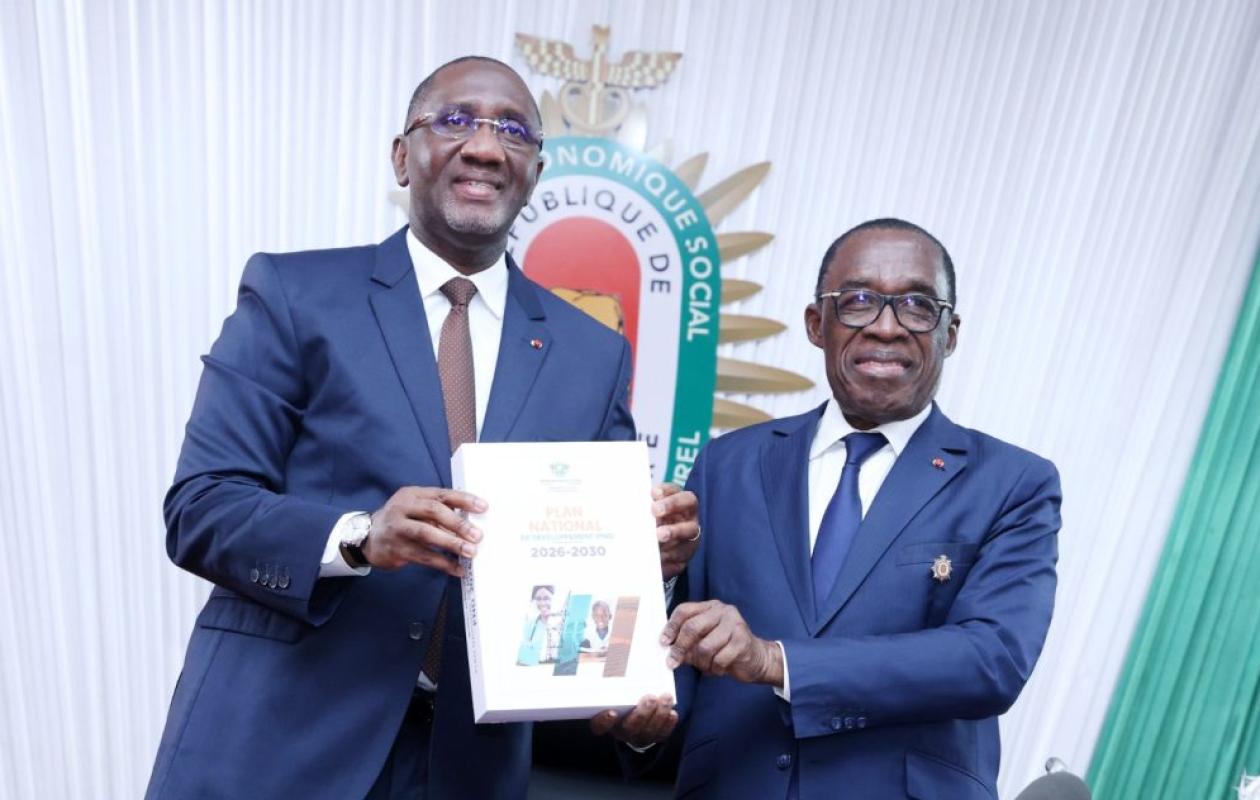
Following the presentation, Dr. Eugène Aka Aouélé, president of the CESEC, officially received a copy of the document from the minister. Commending the government's inclusive approach, Dr. Aka Aouélé described this National Development Plan (PND) as "a compass that will guide the country's development for the next five years."
He emphasized the exceptional nature of this presentation, reserved as a priority for the CESEC immediately after the parliamentary chambers, thus consolidating the central role of the institution in the evaluation and development of public policies in Côte d'Ivoire.
Auteur: ivoirematin
Publié le: Jeudi 11 Juin 2026











Commentaires (0)
Participer à la Discussion
Règles de la communauté :
💡 Astuce : Utilisez des emojis depuis votre téléphone ou le module emoji ci-dessous. Cliquez sur GIF pour ajouter un GIF animé. Collez un lien X/Twitter, TikTok ou Instagram pour l'afficher automatiquement.