Le Canada, les Pays-Bas, la Belgique et la France renforcent leur partenariat pour lutter contre le trafic international de drogues
June 5, 2026
Ottawa, Ontario
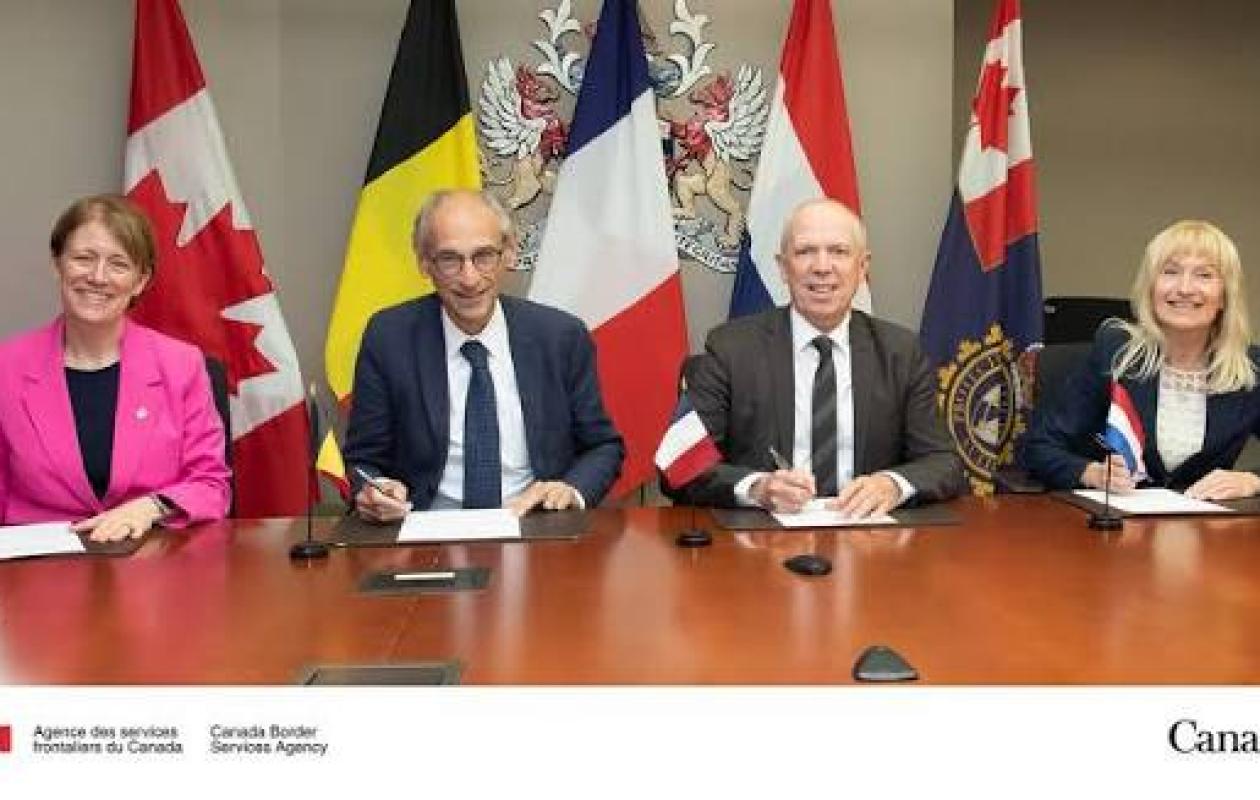
This week, the Canada Border Services Agency (CBSA) signed a letter of intent with the customs administrations of the Netherlands, Belgium and France to strengthen their partnership in the fight against international drug trafficking and to support legitimate trade between their countries.
The letter was signed by CBSA President Erin O'Gorman, Nanette Van Schelven, Director General of the Netherlands Customs Administration, Kristian Vanderwaeren, Director General of Customs and Excise of Belgium, and Florian Colas, Director General of Customs and Indirect Taxes of the French Republic. The letter reinforces the commitment to work more closely together to thwart international drug trafficking by sharing information and best practices between countries and conducting joint operations.
One way criminal networks operate is by exploiting vulnerable individuals and persuading them to transport drugs on their behalf when they travel abroad, sometimes without their knowledge. The four customs administrations are working to raise public awareness of this scheme, warn people of the serious consequences, protect potential victims, and put an end to the criminals' activities.
The signing took place in Ottawa on June 2, 2026, following meetings with senior representatives of the Government of Canada on issues related to customs cooperation in the fight against fraud, security, AI-based border technologies, and multilateral cooperation. During its visit, the European delegation toured CBSA facilities in Montreal, including the Port of Montreal, Montreal-Trudeau International Airport, and the Léo-Blanchette Mail Processing Centre, and observed the tools and techniques used by CBSA officers to intercept contraband and thwart organized crime.
The CBSA works closely with its national and international law enforcement partners to protect communities and promote their prosperity, both at home and abroad.
“To thwart transnational organized crime, coordinated action is needed across our borders. Canada and its partners in the Netherlands, Belgium, and France rely on each other to identify and counter threats. As criminal networks become more agile and coordinated in their efforts to exploit corridors between Canada and Europe, we too must become more resourceful in thwarting them. We are further strengthening our already robust partnership by increasing the exchange of information and intelligence between our customs organizations and by reinforcing our efforts to combat international drug trafficking. Together, we are taking steps to ensure the safety and security of our communities on both sides of the Atlantic.”
— Erin O'Gorman, President, Canada Border Services Agency
“The Netherlands, Belgium, and France face the same patterns of international drug trafficking, making it essential that we act together as international partners. Criminal networks operate across borders, and we must do the same. Our cooperation with Canada is crucial to addressing the increased flow of cannabis shipments to the EU, as evidenced by our recent drug seizure figures, while also tackling the trafficking of substances such as ketamine and synthetic drugs that transit from the EU to Canada.”
I would like to thank our Canadian colleagues for their warm welcome and for their strong and constructive collaboration. By more closely intensifying our exchange of information and our working methods, we strengthen our collective capacity to dismantle these criminal networks and protect our societies.
— Nanette van Schelven, Director General of the Netherlands Customs Administration
"Belgian Customs is committed to strengthening international cooperation in the fight against organized crime through this joint initiative between Canada, Belgium, France and the Netherlands.
As Belgian Prime Minister Bart De Wever stated:
'To break the economic model of mafia networks, international cooperation is not an option, it is an absolute necessity.'
— Kristian Vanderwaeren, Director General of Customs and Excise of Belgium
“Faced with increasingly organized and adaptable transnational criminal networks, we are convinced that international cooperation is a key factor for success. By joining forces, we strengthen our collective capacity to detect, disrupt, and dismantle trafficking networks. With this agreement, we reaffirm our commitment to developing strong and lasting partnerships to protect our territories and contribute to the safety of our citizens.”
— Florian Colas, Director General of Customs and Indirect Taxes of the French Republic















Commentaires (0)
Participer à la Discussion
Règles de la communauté :
💡 Astuce : Utilisez des emojis depuis votre téléphone ou le module emoji ci-dessous. Cliquez sur GIF pour ajouter un GIF animé. Collez un lien X/Twitter, TikTok ou Instagram pour l'afficher automatiquement.