Reprise des Tensions Cambodge-Thaïlande : Frappes Aériennes et Accord de Trêve Rompu
The border between Thailand and Cambodia is once again the scene of clashes, with both countries accusing each other of having reignited hostilities on Monday. Bangkok has confirmed that it is conducting airstrikes and has reported the death of a Thai soldier .
This escalation comes less than two months after a ceasefire agreement that US President Donald Trump described as "historic," signed on October 26. This agreement was intended to end the five days of fighting in July, which resulted in the deaths of at least 43 people and the evacuation of approximately 300,000 civilians.
The violence resumed overnight from Sunday to Monday. The Thai army, claiming to have been attacked by Cambodian forces in Ubon Ratchathani province, reported the death of one soldier and four wounded.
For its part, the Cambodian Ministry of Defense blamed Thailand, stating that Thai troops launched an attack early Monday morning in the provinces of Preah Vihear and Oddar Meanchey, without Cambodian forces retaliating. The president of the Cambodian Senate and former prime minister, Hun Sen, called on his troops to be patient, stating that "the red line for retaliation has been drawn."
Thailand announced the use of fighter jets to "strike military targets" and "stop Cambodian support fire." Thai military spokesman Winthai Suvaree asserted that the strikes were "highly precise" and targeted "only military objectives along the front line, with no impact on civilians."
However, a Cambodian soldier, speaking on condition of anonymity, told AFP that Thai bombing was still continuing late Monday morning in Preah Vihear.
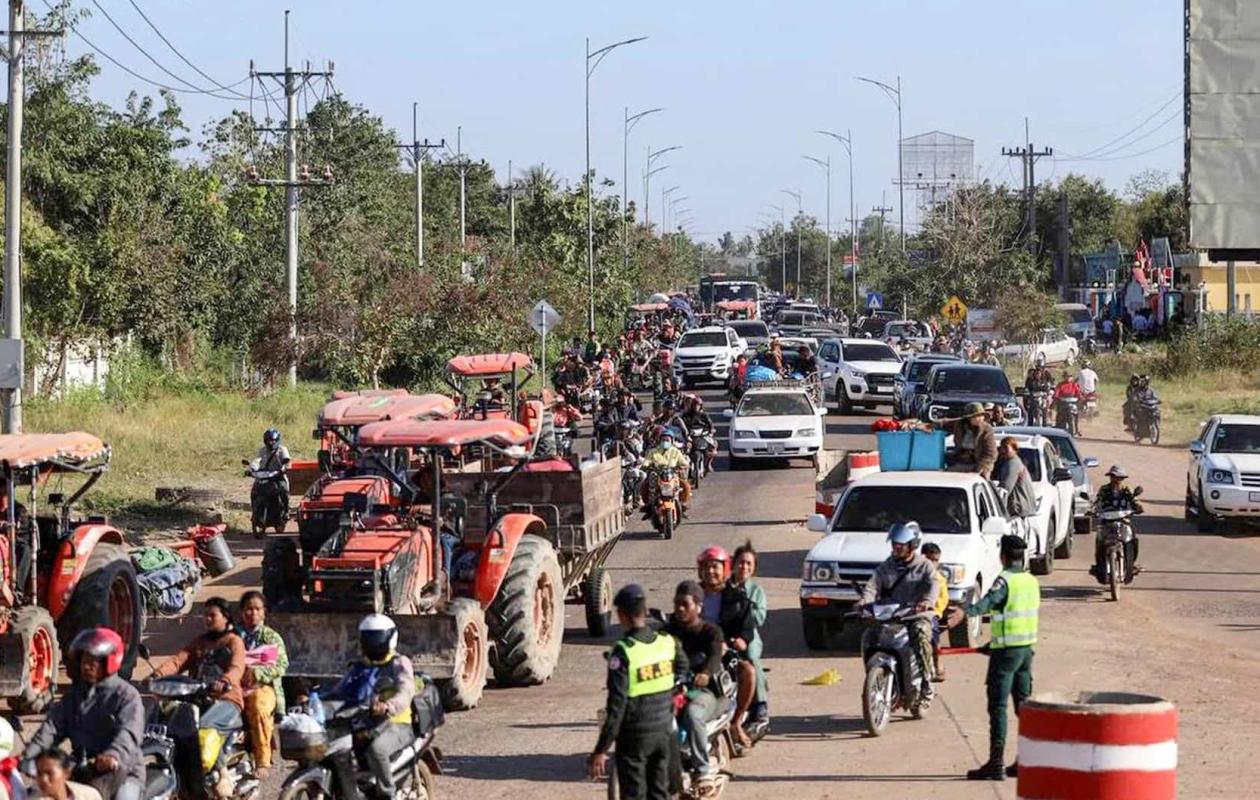
In response to renewed fighting, approximately 35,000 people were evacuated from the Thai side of the border overnight. Authorities in a Cambodian province also reported villagers fleeing "to seek safety."
A Thai evacuee, 59-year-old Pannarat Woratham, expressed her disappointment: "Many of us thought the conflict was finally over. It shouldn't have started up again like this." She stressed that she had "learned the lessons from last time" by preparing to leave quickly.
The October agreement, signed in Kuala Lumpur under the auspices of Donald Trump, was suspended in November by Thailand following a landmine explosion that injured four of its soldiers. Bangkok regularly accuses Phnom Penh of laying new mines, an accusation Cambodia rejects, citing remnants of past conflicts and reaffirming its commitment to the agreement.
While the agreement stipulated the withdrawal of heavy weapons and the clearing of mines, it did not address the underlying causes of the conflict. The primary source of these tensions is a long-standing border dispute concerning the demarcation of the border established during the French colonial era.
The disputed areas, particularly around the Preah Vihear temple — whose sovereignty was granted to Cambodia by the International Court of Justice — remain a major point of contention, with Bangkok refusing to recognize the court's authority on territorial issues.

















Commentaires (0)
Participer à la Discussion
Règles de la communauté :
💡 Astuce : Utilisez des emojis depuis votre téléphone ou le module emoji ci-dessous. Cliquez sur GIF pour ajouter un GIF animé. Collez un lien X/Twitter, TikTok ou Instagram pour l'afficher automatiquement.