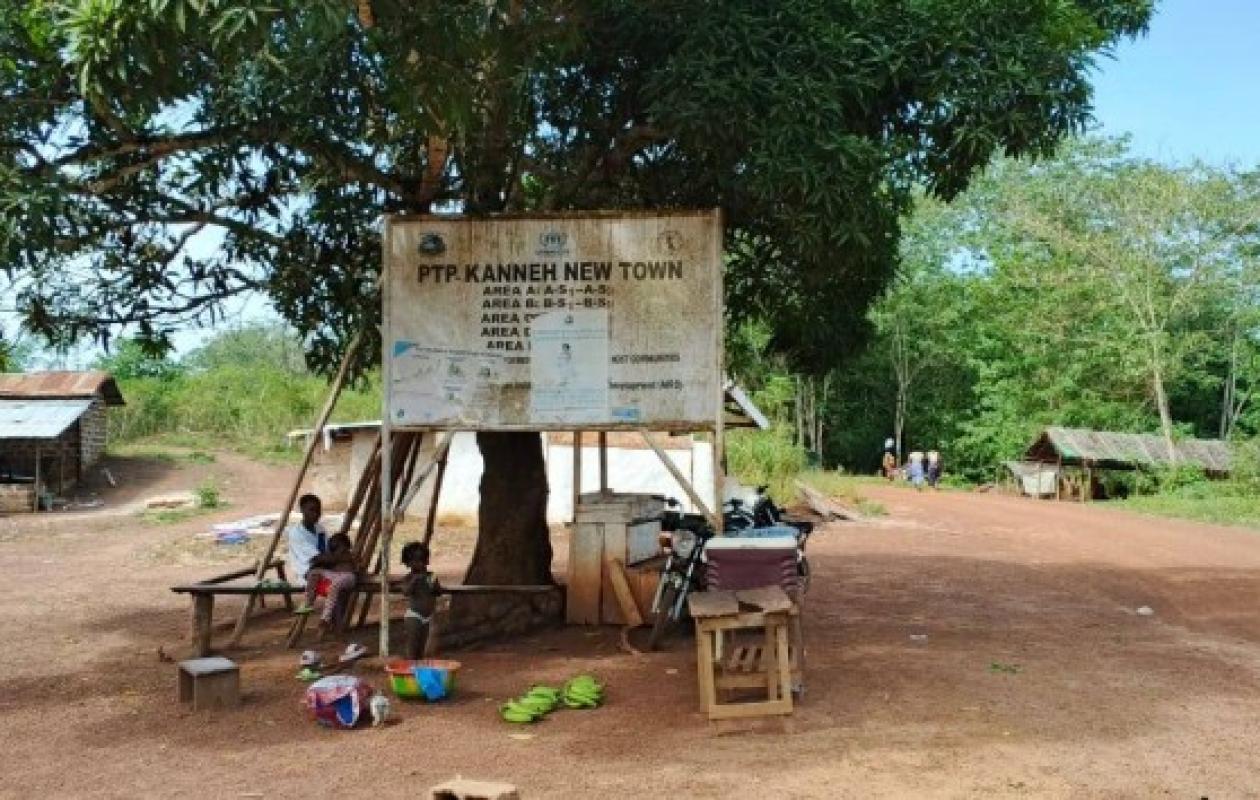
Quinze ans d'exil au Liberia : Le cri de détresse des derniers réfugiés ivoiriens de Zwedru
Fifteen years after fleeing the post-election violence of 2010-2011, a thousand Ivorian refugees are still living in Liberia in precarious conditions. Deprived of UNHCR support, torn between the desire to return home and the fear of losing everything, they are making an urgent appeal to the Ivorian government for a safe and dignified return.
Located 12 kilometers from Zwedru (capital of the Greater Gedeh region) and about 100 kilometers from the Ivorian border, the PTP camp was once the largest refuge for Ivorian exiles. In 2013, during President Alassane Ouattara's visit, the site housed more than 25,000 people. Its thousands of UN tents had earned it the nickname "White City." It was a veritable bustling city where civil servants, soldiers, teachers, farmers, and officials of Laurent Gbagbo's regime lived side by side.
Thirteen years later, in April 2026, the scene is ghostly. The camp has been emptied of almost all its inhabitants. Fewer than a thousand people still reside there. The officers and military personnel took advantage of the waves of repatriation to return home. Today, tall grass has overtaken the abandoned spaces, and scrubland has swallowed the camp's former school. Renamed PTP Kanneh New Town , the site has become a village where peaceful coexistence has taken root between the last Ivorians, the local Liberians, and numerous Burkinabé migrants who have come to cultivate cocoa.
Behind the figures lie complex human stories, marked by resourcefulness and resilience:
For others, remaining in Liberia is a source of regret. Some missed the last official convoys of the Office of the United Nations High Commissioner for Refugees (UNHCR) and the accompanying financial aid. Still others nurtured the dashed hope of resettlement in the United States.
For children in exile, daily life has become an educational struggle. Since 2015, the French-language curriculum has been permanently replaced by the Liberian English-language system. This abrupt shift has led to numerous school dropouts. Bruce Gnomblehi, who was in 9th grade in 2015, had to leave school to become a motorcycle taxi driver: “My uncle, who stayed in Liberia, sold my father’s forest after he died here. We live with our mother, without any support. Here, we pray we don’t get sick,” he says, appealing to President Ouattara for help.
Land disputes remain the main obstacle to return. Boué Hubert, one of the camp's elders, discourages refugees from going back to Ivory Coast. Having lost his own land, he married a Liberian woman, which allowed him to acquire 20 hectares of forest to produce cocoa. "Many brothers who returned home have had serious land conflicts," he warns.
On the administrative front, the situation is at a standstill. Although Ivorian authorities have come to the area to issue passports, many residents have been waiting for their documents for over two years.
Djahi Christophe, president of the Ivorian community in the village, downplays the security concerns. After traveling to Ivory Coast for his father's funeral, he observed a return to normalcy: "On the roads, the security forces are conducting checks, a sign that security has been restored. Our wish is not to stay here permanently. We want to return one day, as soon as our financial situation improves."
Since the UNHCR has ended its repatriation programs, refugees are now turning directly to Côte d'Ivoire. They emphasize that they did not choose exile, but fled war.
"No Ivorian came here of their own free will. If President Laurent Gbagbo and Blé Goudé have returned to the country, what are we still doing here?" they ask in unison.
Their message to the government is clear: they are demanding the dispatch of ministerial representatives to assess their living conditions, but above all , legal and land-related support . Without government assistance in recovering their stolen land, a permanent return seems impossible to them.
While the road back may be fraught with obstacles, exile will at least have allowed the wounds of the past to heal. In PTP, yesterday's former enemies have made peace.
Soumahoro Hilaire , a former RHDP (pro-Ouattara) youth activist who fled Bloléquin in March 2011, now lives in perfect harmony with Kaho Denis , a former "young patriot" (pro-Gbagbo) who fled the same locality in the face of the advance of the FRCI.
“We have forgiven each other. Here, we need to be united to overcome our difficulties. We ask politicians to follow our example,” the two men declared. The ultimate proof of this reconciliation, brought about by fate: Soumahoro’s sister is now Kaho’s fiancée. They share the same table and plan to return together, on the same day, to the land of their ancestors.








Commentaires (0)
Participer à la Discussion
Règles de la communauté
💡 Astuce : Utilisez des emojis depuis votre téléphone ou le module emoji ci-dessous. Cliquez sur GIF pour ajouter un GIF animé. Collez un lien X/Twitter, TikTok ou Instagram pour l'afficher automatiquement.
Se connecter
Commentez avec votre profil, votre photo, et soyez averti des réponses.