Projet Monnaie Eco : Le dilemme de la souveraineté pour les pays hors franc CFA
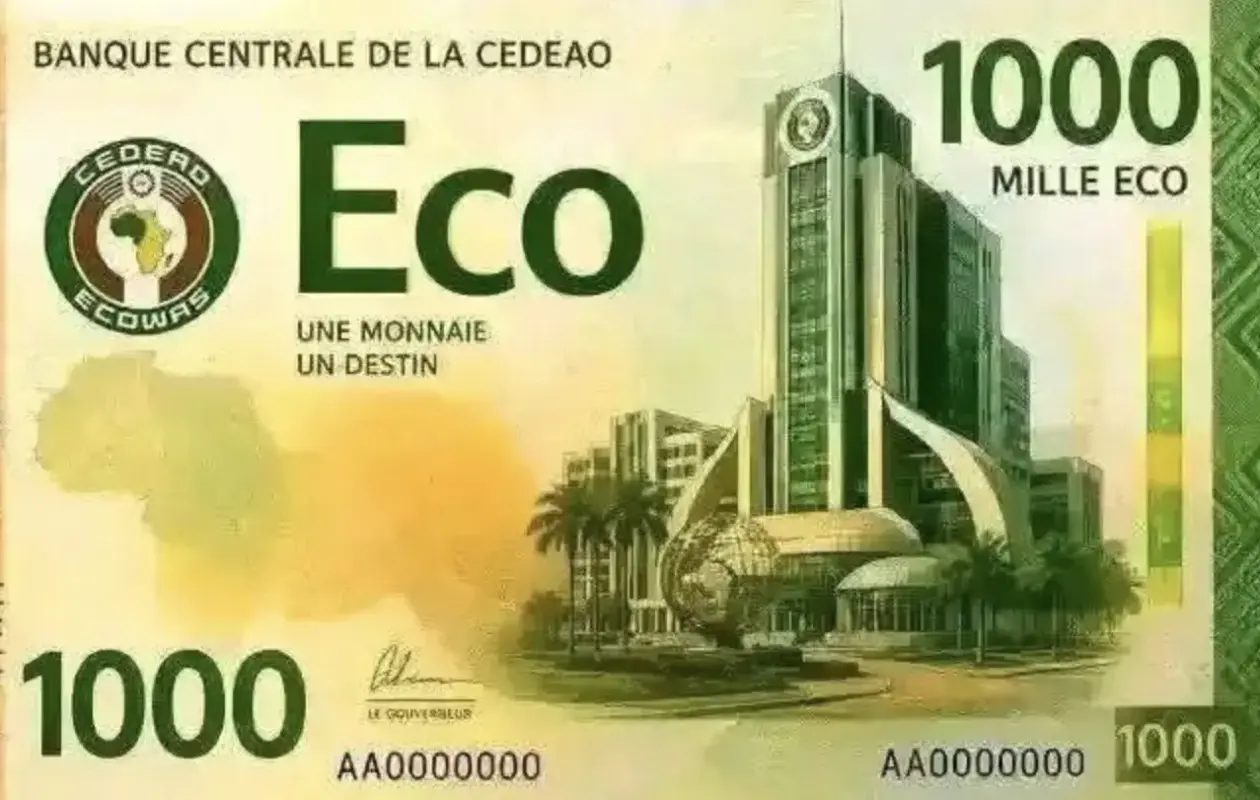
While ECOWAS remains committed to launching the Eco in 2027, countries already possessing their own national currencies—Nigeria, Ghana, Gambia, Liberia, and Guinea—are hesitant to take the plunge. Caught between economic imperatives, national pride, and strategic uncertainty, the West African single currency increasingly resembles a political mirage.
A story of missed opportunities
Initially conceived in December 2000 for the 15 members of ECOWAS, the single currency has accumulated more than two decades of successive postponements: 2003, 2005, 2009, 2015, then 2020.
At the 69th ECOWAS summit, held on July 19, 2026 in Freetown, the heads of state reaffirmed their commitment to a launch in 2027. However, faced with the impossibility of unanimous accession within the deadlines, the organization now favours a "multi-speed" deployment : only countries meeting the macroeconomic convergence criteria will start the process, the others to be supported later.
A deep-seated attachment to national currencies
The major obstacle lies in the reluctance of states to abandon currencies rooted in their history and identity:
Nigeria (Naira): The region's leading economic power, the country views its currency as an absolute constitutional symbol. Despite devaluations, Abuja refuses to relinquish its monetary sovereignty without solid guarantees.
Ghana (Cedi): Buoyed by soaring gold prices, Ghana prefers to consolidate its own foreign exchange reserves through its central bank rather than merge into an uncertain whole.
Guinea (Guinean franc): Although he joined the Presidential Task Force on the single currency at the Freetown summit, President Mamadi Doumbouya quickly established a strict framework: Guinea will remain faithful to the Guinean franc, a pillar of its economic sovereignty.
Gambia (Dalasi) and Liberia (Liberian Dollar): Although of very disproportionate value compared to the CFA franc, these currencies remain instruments of national policy which governments struggle to part with.
Economic criteria that are beyond our reach
By 2026, no ECOWAS country will meet all the macroeconomic convergence criteria .
Macroeconomic uncertainties: Nigeria faces double-digit inflation and a pressured naira, while Ghana is just emerging from an adjustment program with the IMF.
Unclear governance: While the filing of the "ECO" trademark with OAPI constitutes a legal step, the decision-making rules and the functioning of the future regional central bank remain undecided.
Uncertainty surrounds the first group: The idea of a pioneering core uniting countries like Nigeria, Ghana or Guinea remains uncertain, as does the effective integration of the WAEMU countries (already united by the CFA franc).
Political divisions and lack of transparency
The project also suffers from profound geopolitical differences:
The linguistic and monetary divide: Nigeria, Ghana, and The Gambia demand a 100% West African currency, free from any ties or cash guarantees with France. This stance creates a divide with the Francophone countries of the WAEMU.
Furthermore, ECOWAS's approach is heavily criticized. Unlike the creation of the Euro, which was guided by a clear and transparent roadmap, the Eco suffers from unstable political communication and a lack of clarity for the general public.
What future for the Eco?
The meeting of the Presidential Task Force, scheduled for the end of 2026, is expected to clarify many points. However, with the 2027 deadline just months away, the project resembles a puzzle whose pieces refuse to fit together. By opting for gradual integration, ECOWAS avoids outright failure but risks creating a fragmented union, while national currencies continue to gain ground.
⚡ Résumé expressgénéré par IA, vérifié par la rédaction
- Le projet de monnaie unique Eco de la CEDEAO, visant un lancement en 2027, se heurte à la réticence des pays ayant leur propre devise (Nigeria, Ghana, Gambie, Libéria, Guinée) qui y voient un symbole de souveraineté nationale.
- Aucun pays de la CEDEAO ne remplit en 2026 l'ensemble des critères de convergence macroéconomique, et des zones d'ombre persistent sur la gouvernance et les règles de la future Banque centrale régionale.
- Le projet souffre de clivages géopolitiques, notamment entre pays anglophones exigeant une monnaie sans lien avec la France et les pays de l'UEMOA, ainsi que d'un manque de transparence et de lisibilité pour le public.
Soyez courtois. Pas de messages agressifs ou insultants.
Pas de messages inutiles, répétitifs ou hors-sujet.
Pas d'attaques personnelles. Critiquez les idées, pas les personnes.
Contenu diffamatoire, vulgaire, violent ou sexuel interdit.
Pas de publicité ni de messages entièrement en MAJUSCULES.
💡 Astuce : Utilisez des emojis depuis votre téléphone ou le module emoji ci-dessous. Cliquez sur GIF pour ajouter un GIF animé. Collez un lien X/Twitter, TikTok ou Instagram pour l'afficher automatiquement.
Se connecter
Commentez avec votre profil, votre photo, et soyez averti des réponses.








Commentaires (0)
Participer à la Discussion
Règles de la communauté
💡 Astuce : Utilisez des emojis depuis votre téléphone ou le module emoji ci-dessous. Cliquez sur GIF pour ajouter un GIF animé. Collez un lien X/Twitter, TikTok ou Instagram pour l'afficher automatiquement.
Se connecter
Commentez avec votre profil, votre photo, et soyez averti des réponses.