Tchad : Le projet PACRAS signe-t-il la fin du modèle des camps de réfugiés ?
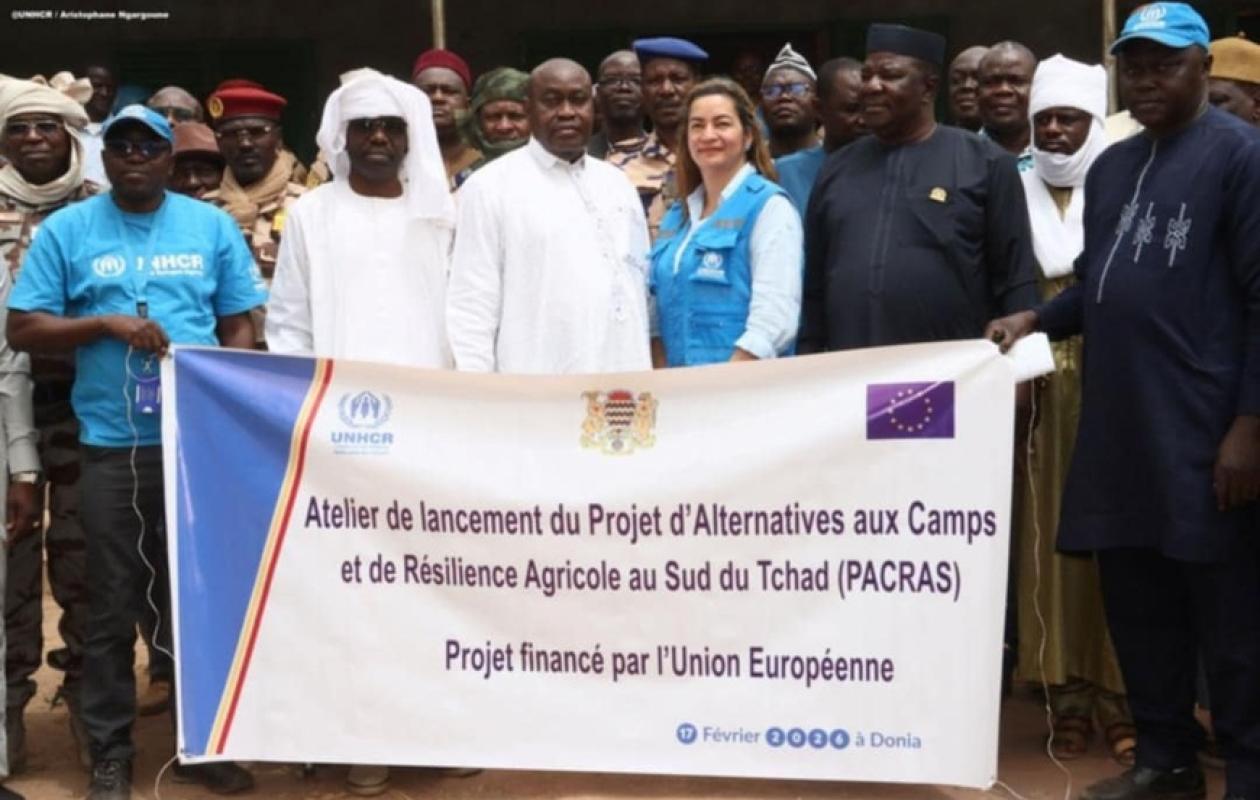
In southern Chad, a small humanitarian revolution is underway. In Donia (Logone Oriental), the UNHCR, the European Union and the Chadian government officially launched PACRAS : the Project for Alternatives to Camps and Agricultural Resilience in Southern Chad.
The objective is clear: to move 145,000 Central African refugees away from dependency and towards economic self-sufficiency.
For many Central Africans, exile has lasted for more than 20 years. PACRAS proposes to break the cycle of humanitarian dependence by transforming beneficiaries into economic actors.
Funded by the European Union, this project is not simply a relocation. It is a genuine local development plan:
| Area of intervention | Concrete actions |
| Agriculture | Pooling land between refugees and local people to boost production. |
| Infrastructure | Strengthening schools, health centers and access to water. |
| Economy | Support for the marketing of crops to boost local markets. |
To avoid conflicts related to the use of natural resources, PACRAS incorporates a strong environmental component:
The challenge: To guarantee harmonious integration and lasting understanding between newcomers and host populations.
With over 1.5 million refugees , Chad is one of the most hospitable countries in the world. If PACRAS succeeds, it could serve as a "benchmark model" for all of Africa, proving that a prolonged crisis can be transformed into a catalyst for shared prosperity.
















Commentaires (0)
Participer à la Discussion
Règles de la communauté
💡 Astuce : Utilisez des emojis depuis votre téléphone ou le module emoji ci-dessous. Cliquez sur GIF pour ajouter un GIF animé. Collez un lien X/Twitter, TikTok ou Instagram pour l'afficher automatiquement.
Se connecter
Commentez avec votre profil, votre photo, et soyez averti des réponses.